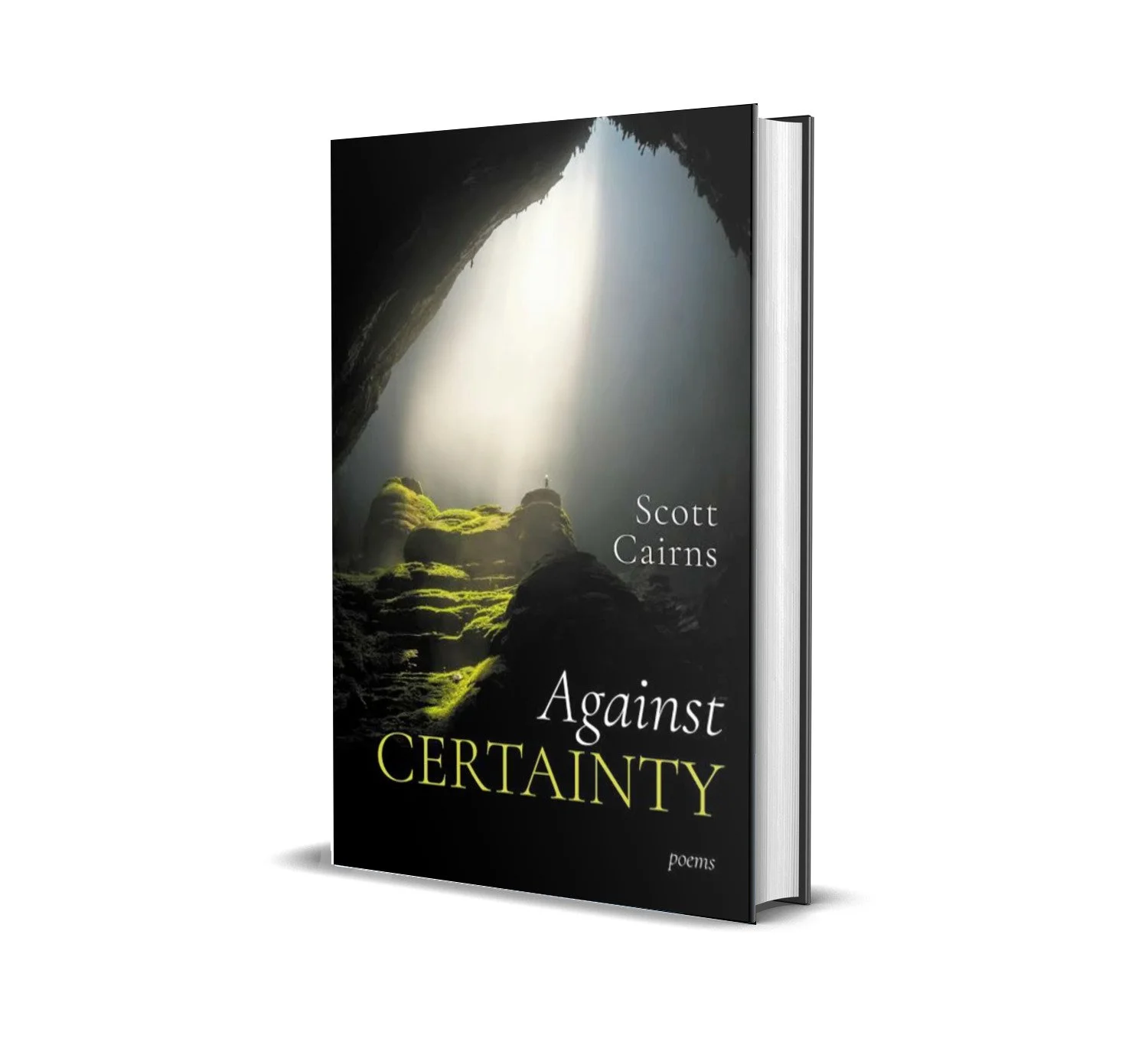
No Foolin’
These are intelligent poems, almost miraculously articulate and informed, and stuffed with references to Cairns’ lifetime of reading.

Unto Thyself Any Graven Images
William Blake was not only a painter and a poet, but considered himself a prophet of God, and thought every Christian should be one too. His work has attracted critical attention from its earliest days, and his body of poetic work is among the most-considered we have in English.

Jar of Flies
Mostly, these poems are brave and direct meditations on common life, but not in the aestheticized version of the confessionals wherein the poet cuts an onion so lovingly, so specifically, so poetically that we're supposed to go re-enjoy the world in all its quirky wonder thereafter. Rather, they're concerned with the real difficulties of trying to please one's father; of having friends lose touch due to drug abuse, with everything.

Selling Romantic Victorianism
Literary Advertising and the Shaping of British Romanticism helpfully chronicles the rise of advertising in periodicals, highlighting its methods and subjects, from shoe-blacking to tooth powders.

Spellbinding: on Mariner, a Voyage with Samuel Taylor Coleridge
Let’s get one thing straight: there is nothing wrong with shooting an albatross. The albatross was never taken commonly to be a symbol of Christian piety, nor were they “tutelary spirits” of a particular region, as Coleridge’s friend Wordsworth somewhere suggests, and as guides of a voyage they were perfectly useless. To kill one (or several) was not to declare one’s independence of nature, or of a God’s provision, and thus mount up on waxen wings, but was instead an effective way to get fresh meat at sea.

Rediscover Poetic Enchantment with Charles Taylor
In Four Quartets, T. S. Eliot called poetry “a raid on the inarticulate.” I’ve always liked the phrase. It implies the chaotic mess of life in a postlapsarian world is mimicked in language’s fragmentary nature. It also implies poets can do something about it, diving into the deep as they find treasure and nourishment. Having found them, they can offer them for our benefit. There’s something clandestine about the whole operation—a raid—reminiscent of the Promethean theft of fire.

On Shelley and the Apprehension of Life
Poetry is already opaque enough for most readers, and the critic’s role is to offer clarity where possible.
Fading Crimean Flowers
In their refusal to aestheticize Crimean warfare, as most of their fellow poets and newspapermen had done, Sydney Dobell and Alexander Smith, in the co-authored Sonnets on the War (1855) present a harrowing picture of the conflict from myriad viewpoints, all of which deny the patriotism and hawkishness implicit in glamorizing armed conflict.
A Hateful Cawing from the Crows
W. E. Aytoun's satirical verse drama, Firmilian (1854), an anti-radical, scattershot missive meant to re-align British poetic tastes by reversing the aesthetic gains made by Romanticism in the decades prior to its publication, has been called “one of the most successful pieces of literary criticism ever written,”but did Firmilian accomplish its purposes? In what ways can we consider it successful if not?
Shelley's Spasmodic Afterlife
Percy Shelley's political legacy passed through an often-neglected school of writers to world leaders and revolutionaries globally in the decades following his death. When assessing his legacy, we should not overlook those early, ardent appreciators known as "the Spasmodic School." Alexander Smith, Sydney Dobell, J. Stanyan Bigg, and even James Thomson B.V. took Shelley's call to a revolution conducted through imaginative sympathy seriously, and together, helped to fan his "fading coal" to flam
Violence and Absence
In several poems, William Wordsworth considers the active representation of absence-- a stone circle, a zero, an “O the difference to me!”-- as a response to violence. Absent histories create our own involuntary misreadings, well-rehearsed in New Historicist debates surrounding Tintern Abbey, and Three Years She Grew, but present absences can heighten the descriptive violence as in a Hitchcock film where one only hears the scream as a camera cuts away, or as in Wordsworth’s lesser-known Alice Fell, wherein the violence reeked upon a girl is displaced onto surrounding objects making it at once more palatable and more subversive. This paper’s method is to consider Ovid, Wordsworth’s favorite poet as a young man, as a likely template for this trope. I show that certain of Wordsworth’s poems emerged as exercises in Ovidian imitation, and that he used the erasure of this poetic father to add darkness and suggestion to poems that are often misread as innocent.
Theatricality and Imaginative Failure in Keats
Keats’ “Ode of a Grecian Urn” may be one of the language’s greatest poems, but it also contains some of poetry’s worst lines. Those lines, especially “More happy love, more happy, happy love,” are not mis-steps; they are failures, and, I’m arguing, active failures in Zizek’s sense, a kind of theatrical dive, meant to claim for the poet a documentable experience of the sublime.