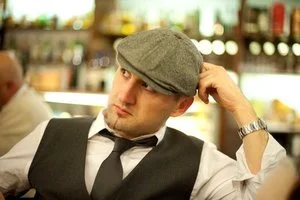
Buechner on the Rostrum
Even if we lay aside the great cathedrals and the advancements in every art form that they entail, and the canon of western music, the most accomplished of our painters, and even if we set aside for the moment the great civic achievements — the invention of hospitals, orphanages, and such, and science, let’s leave science to one side too — there are still other areas of human creation, either invented whole cloth or practiced all but entirely by Christians, without whom they would cease to exist in any meaningful way.
There are in fact too many of these to go on about, even within the genre of literature, wherein I mean to situate us. Consider: would apocalypse as a genre, exist without people for whom the end times are a concern? Or devotionals — would there be books with dates in them to tell readers when they should be read without the quiet time crowd? Would allegory be necessary as a category, and thus as a mode of creation, if there weren’t people who shared an over-story to which allegories might refer? I doubt it very much.
Here though, I want suggest a mode of literary creation which I think understudied as such, and which all but certainly would not exist without Christians practicing it. It’s important not only for that fact, which after all may be nothing more than a novelty, but for its vast reach, influence, and sheer number of practitioners, of whom, I count Frederick Buechner among the best.