Small Letters and Sparrows
What qualifies as a miracle worth recounting? And how far beyond the probable does an event need to be before we consider it miraculous?
4 Simple Ways to Help Your Most-Disconnected Students
Faculty members have a key role to play in retaining students, to the benefit of both.
Joy of Every Longing Heart
But what if we think about a different shape for Advent, one that builds slowly toward Christmas in a gradual way–she’s pregnant! There’s the star!– that Christmas day is a punctuation, the celebration, all our hopes come true at last, and then Christmastide is the season of reflection there-following?
Violence and Absence
In several poems, William Wordsworth considers the active representation of absence-- a stone circle, a zero, an “O the difference to me!”-- as a response to violence. Absent histories create our own involuntary misreadings, well-rehearsed in New Historicist debates surrounding Tintern Abbey, and Three Years She Grew, but present absences can heighten the descriptive violence as in a Hitchcock film where one only hears the scream as a camera cuts away, or as in Wordsworth’s lesser-known Alice Fell, wherein the violence reeked upon a girl is displaced onto surrounding objects making it at once more palatable and more subversive. This paper’s method is to consider Ovid, Wordsworth’s favorite poet as a young man, as a likely template for this trope. I show that certain of Wordsworth’s poems emerged as exercises in Ovidian imitation, and that he used the erasure of this poetic father to add darkness and suggestion to poems that are often misread as innocent.
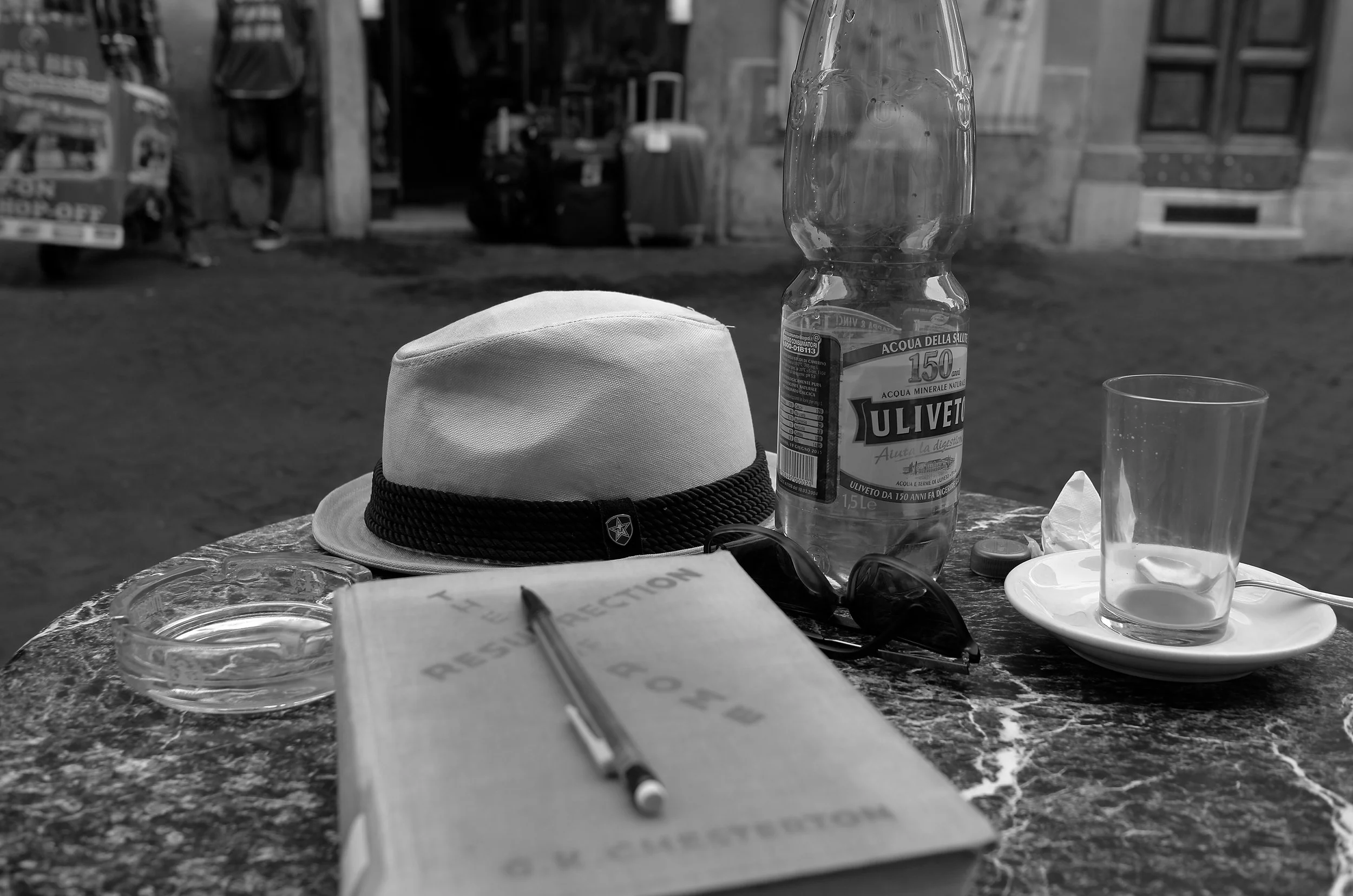
Still Life with Wine and Occasional Fires
Normally, though still a frenzy, my writing has built-in speed bumps, to keep the crystal from jittering around.
Can You Really Do Humanities Research with Undergraduates?
Admissions brochures routinely tout the benefits of small class sizes, with pictures of lab-coated undergraduates doing beaker work alongside science professors in safety goggles. I’ve always wondered: Is the research, like the image, staged or real?
Theatricality and Imaginative Failure in Keats
Keats’ “Ode of a Grecian Urn” may be one of the language’s greatest poems, but it also contains some of poetry’s worst lines. Those lines, especially “More happy love, more happy, happy love,” are not mis-steps; they are failures, and, I’m arguing, active failures in Zizek’s sense, a kind of theatrical dive, meant to claim for the poet a documentable experience of the sublime.
6 Black Protest Poets
In times of increasing racial tensions, it can be difficult to know what to do with one’s anger, righteous or otherwise. And it can be just as difficult to know where to get an honest picture of the worldviews of people we may consider, for whatever combination of reasons, “other.”
The Life-Changing Magic
I want for them a sense of super-abundance borne not of the horde of possessions on which they rest, but of the competence and creativity they are even now developing, the sense that they can do without some things, can toss whole essays into the rubbish bin if they need to.
5 Contemporary Poets Christians Should Read
I’m always a little sad after a poetry reading when someone comes up and tells me they’re “really into Christian poets,” and when I ask excitedly “which ones?” they rattle off a short list that ends with Gerard Manley Hopkins or George Herbert

Glynn Young for Tweetspeak
These poems by Willett remind us that the elegy is a living poetic form, needed as much now as it ever was. Perhaps even more.
The Christological Vision of Pirates of the Caribbean
The curse, the risen dead, the rightful captain, the man who does the waking, the island, and the great adventure all exist independently of her belief. She doesn’t get to create her reality, as none of us do, but is instead a character in someone else’s high seas adventure.
Mistrusting C.S. Lewis
I suspect that, casting about for firm ground on which to stand in the absence of a reliable canonicity of taste, scholars hold up as a final source that one source they take to be originary as the end of discussion.
The Quietest Painting in the Room
Matthew is about to get created in the exchange just the way Adam was, is about to come alive to himself and to history in a way no one, least of all this poor, pantalooned sop, had imagined a few coins ago.
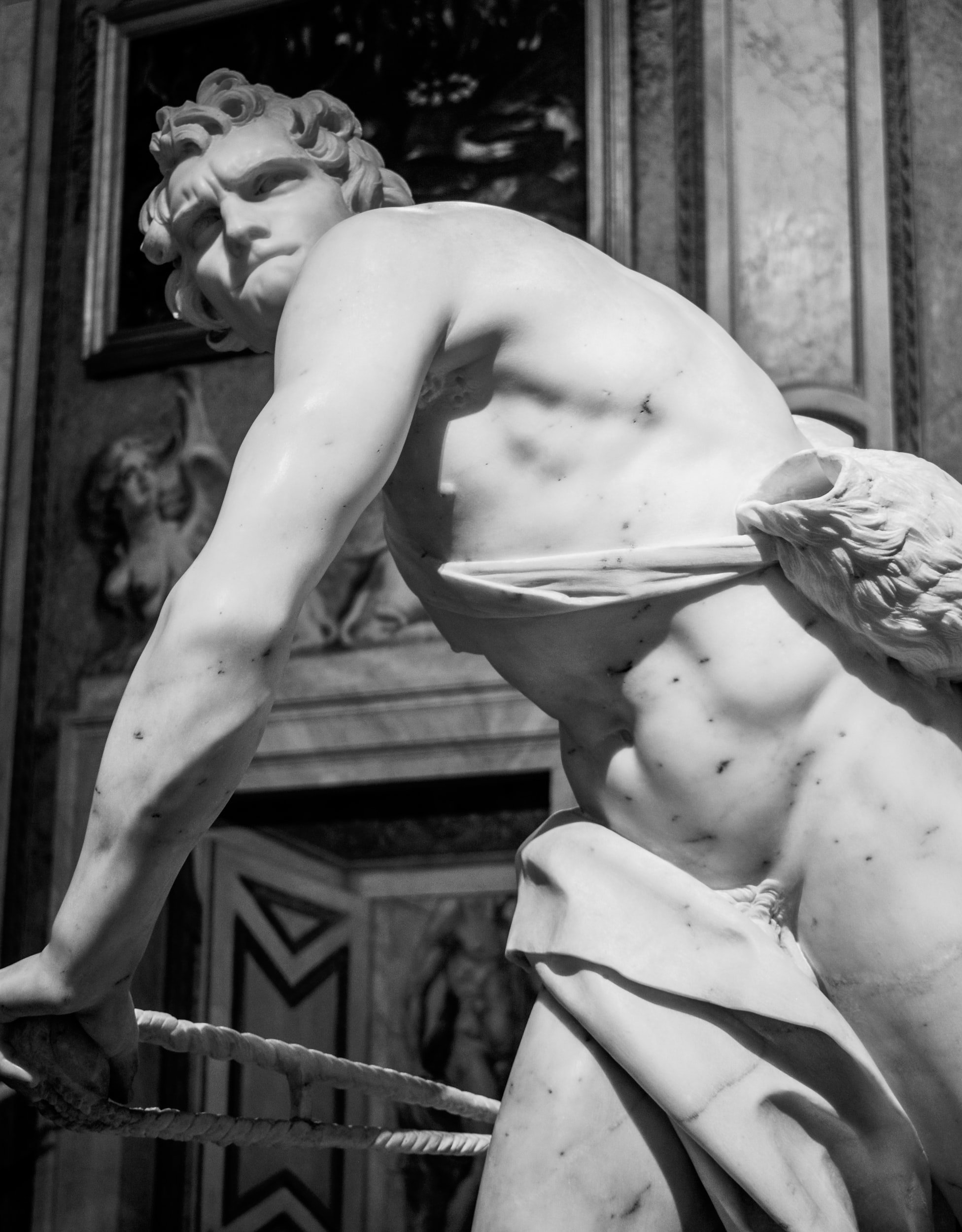
David’s Dropped Stone
David’s body is one machine, a man full of God’s might — of faith so strong he can wield it like a sword.
The Breaking Towers: on Hart Crane’s Crumbling Muses
Say even that Crane is a decent poet and a dozen thinkers will write in to say that you’ve finally lost it; will wonder even whether you’re being sincere, or simply provocative.
The Missing Campus Map
That’s the thing about codes and cultures: they are learned through use.

Daniel Rattelle for North American Anglican
Unlike Rilke, Willet is not ultimately afraid of the perfection of angels. He can turn our morbid foreknowledge into Christian hope.
Mark S. Burrows for Mockingbird
“Precisely this “more” is what gives these poems their strong allure.”